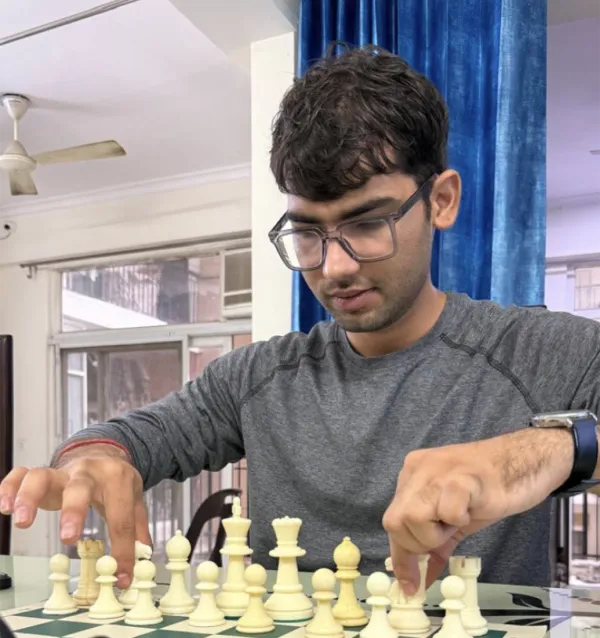
As a FIDE Rated chess coach who specialises in children's instruction, the most common question I receive from parents is: "How do I teach my child chess? Where do I even start?"
The good news: teaching chess to children is far easier than most parents expect. Children's brains are exceptionally well-suited to learning chess — they absorb patterns rapidly, they're not afraid to experiment, and they haven't yet developed the mental habits that hold adult learners back.
Here is my complete, step-by-step guide to teaching chess to a child of any age.
At What Age Should a Child Start Learning Chess?
The short answer: as early as 5 years old.
Research and my own classroom experience both suggest that children as young as 5–6 can learn the basic rules of chess and begin developing pattern recognition. By age 7–8, they can start understanding simple tactical ideas. By 10–12, a child who has had consistent coaching can compete in district-level tournaments.
The longer the child plays, the more they benefit from the cognitive advantages chess provides — improved concentration, mathematical thinking, and emotional resilience.
Step 1: Teach the Board, Not the Pieces
Most parents make the mistake of immediately jumping to how each piece moves. Before you do that, teach the board itself.
Teach your child:
- The board always has a white square in the bottom-right corner ("White on Right")
- The ranks (rows) are numbered 1–8
- The files (columns) are labelled a–h
- Each square has a unique name (e.g., e4, d5)
Spend 10–15 minutes on this. Use a physical board and point to squares, asking the child to name them. Make it a game. This foundation makes everything else easier to explain.
Step 2: Teach the Pieces One at a Time
Do NOT teach all six pieces in one session. It's overwhelming and nothing sticks.
My recommended order:
Session 1: The Rook
The rook moves in straight lines — horizontally and vertically. It's the easiest piece to learn. Play a mini-game: can the rook capture all the opponent's rooks?
Session 2: The Bishop
The bishop moves diagonally and always stays on one colour. Discuss why this means each player has a "light-squared bishop" and a "dark-squared bishop."
Session 3: The Queen
The queen combines the rook and bishop. She's the most powerful piece. Children immediately understand why — she can do everything.
Session 4: The King
The king moves one square in any direction. Teach check and the fact that the king can never move into danger. This is also a good time to introduce checkmate — the goal of the game.
Session 5: The Knight
The knight is everyone's favourite — and the trickiest to learn. The L-shape (two squares in one direction, one square perpendicular) takes a few sessions to become natural. Be patient.
Session 6: The Pawn
The pawn moves forward one square (or two from its starting position) and captures diagonally. Teach en passant and pawn promotion last — these are advanced concepts that can wait.
Step 3: Play Mini-Games Before Full Games
Before playing a full chess game, play these mini-games to reinforce each piece:
- Rook endgame: Two rooks vs two rooks — first to capture all wins
- Queen vs Rook: The stronger side practises coordination
- King and pawn endgame: Simple endgame basics with just kings and pawns
These mini-games are far more educational than full games for young beginners, because every move matters and children immediately see the consequences of their choices.
Step 4: Introduce the Three Core Principles
Once your child can play a full game, teach these three principles before anything else:
-
Control the centre — Move a pawn to e4 or d4 on the first move. The centre is the most important part of the board.
-
Develop your pieces — Move your knights and bishops out before doing anything fancy. Don't move the same piece twice in the opening.
-
Castle your king — Get the king to safety. A king stuck in the centre is always in danger.
These three principles alone will take your child from a raw beginner to a solid intermediate player. Everything else builds on top of them.
Step 5: Teach Them to Analyse Their Games
The single biggest difference between children who improve rapidly and those who plateau is this: the fast improvers analyse their games.
After each game (especially losses), sit with your child and ask:
- "Where do you think things went wrong?"
- "What was your plan on move 10?"
- "If you could play that position again, what would you do differently?"
This post-game analysis builds critical thinking, self-awareness, and resilience — skills that matter far beyond the chessboard.
How a Professional Coach Accelerates This Process
The steps above will teach your child to play chess. A professional FIDE Rated coach will do far more:
- Identify your child's learning style — visual, auditory, or kinesthetic — and adapt instruction accordingly
- Build a structured training plan — tactics puzzles, endgame study, opening repertoire, all sequenced properly
- Prepare for tournaments — psychological preparation, time management under pressure, studying opponents
- Keep motivation high — professional coaches know how to make lessons engaging, not a chore
At TheChessLifestyle, we specialise in children's chess instruction from age 5 upward. Our FIDE Rated coaches have worked with hundreds of children, including national-level junior players.
Common Mistakes Parents Make When Teaching Chess
- Teaching too fast — Give each concept time to settle before introducing the next
- Playing at full strength against the child — Let them win sometimes. Crushing defeats kill motivation.
- Skipping the basics to jump to tactics — Tactics are important, but not until the child understands why pieces are valuable
- Forgetting that it should be fun — If the child is not enjoying it, they will not continue
The Right Time to Get a Coach
If your child is showing genuine interest and playing regularly, it's time to get a coach. This is usually around 6–8 years old, after they've learned the basic rules.
At TheChessLifestyle, we offer a completely free 45-minute trial class — no credit card, no commitment. Our coach will assess your child's current level, identify their strengths and gaps, and show you exactly what a structured lesson looks like.
Book the trial today and see the difference expert instruction makes — usually visible within the first session.