USCF & FIDE Ratings for Kids: A Parent's Complete Guide to Scholastic Chess
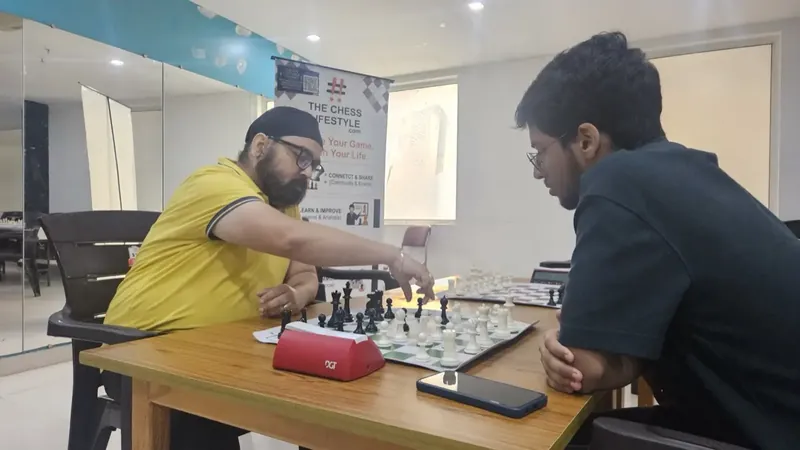
When children first start learning chess, it begins with curiosity: how the knight jumps, how pawns capture diagonally, and the thrill of their first checkmate. But as soon as your child joins a school chess club or enters an after-school tournament, parents encounter a world of unfamiliar acronyms and numbers: USCF, FIDE, provisional ratings, and quads.
As a parent, you want to know: What does my child's rating actually mean? What is a good rating for their age? And how do we prepare them for school tournaments without overwhelming them?
In this guide, we break down everything parents in the USA, UK, Canada, Australia, and the Middle East need to know about scholastic chess ratings and tournament progression.
1. The Big Three: USCF vs. FIDE vs. Chess.com Ratings
One of the most common confusions for parents is why their child has a rating of 1100 on Chess.com but attends a local USCF or FIDE tournament and faces a much tougher challenge. Here is how the systems differ:
| Rating System | Governing Body | Type of Play | Key Parent Takeaway |
|---|---|---|---|
| USCF Rating | US Chess Federation | Over-the-board & official scholastic tournaments in the USA | The official gold standard for scholastic rankings, state championships, and college resumes in the US. |
| FIDE Rating | International Chess Federation | Global international tournaments & official titles (FM, IM, GM) | The worldwide standard. FIDE ratings are recognized globally across Europe, Asia, Australia, and the Americas. |
| Chess.com / Lichess | Online Platforms | Digital rapid, blitz, and bullet games | Great for daily practice, but digital ratings are typically 150 to 300 points higher than official over-the-board ratings due to faster time controls. |
2. What is a "Good" Chess Rating for School Students by Age?
Chess ratings are not tied to age — an 8-year-old can beat a 40-year-old adult. However, for parents wanting realistic milestones, here is how scholastic rating benchmarks typically progress with structured coaching:
- Ages 5–7 (Kindergarten – Grade 2): Beginners start Unrated. After 6–9 months of foundational coaching (learning piece values, checkmate patterns, and avoiding hanging pieces), reaching 400–700 is an outstanding start.
- Ages 8–10 (Elementary – Middle School): With structured tactics and opening instruction, ratings of 800–1100 indicate solid calculation and regular tournament readiness. Breaking 1000 places a child in the upper tier of school chess clubs.
- Ages 11–14 (Middle – High School): A rating of 1200–1500 reflects deep tactical awareness, basic opening repertoire knowledge, and strong endgame fundamentals. Students at this level regularly place in regional and state scholastic events.
- Ages 15+ (Competitive Scholastic Champions): Ratings of 1600–1900+ place students in the top percentiles nationally, often competing for national titles, varsity team captaincy, and international FIDE rating milestones.
Coach's Tip for Parents: Never evaluate a child's chess progress solely on weekly rating swings. In scholastic chess, ratings fluctuate as kids experiment with new openings. Focus on blunder reduction and game review quality — the rating points will follow naturally.
3. How School Chess Tournaments Work
If your child is attending their first scholastic tournament, here are the essential elements parents should know:
The Swiss System
Unlike knockout sports where a loss sends you home, almost all scholastic chess tournaments use the Swiss System. Every child plays all scheduled rounds (usually 4 to 5 games in a day). Winners play winners, and players who lose are paired with other students on the same score. This ensures every student gets full competitive experience regardless of initial results.
Scholastic Quads
In many US and UK cities, clubs host "Quads" — small 4-player round-robin tournaments where kids are grouped strictly by rating. Quads are ideal for beginners because they guarantee three closely contested games without overwhelming crowds.
Clocks and Algebraic Notation
Most tournaments from Grade 3 onwards require children to record their moves in algebraic notation (e.g., 1. e4 e5 2. Nf3) and use a digital chess clock (typically G/30 or G/45, meaning each player has 30 to 45 minutes). At TheChessLifestyle, we train students on digital notation and clock pacing in live sessions before their first over-the-board event.
4. Why Online FIDE Coaching is the Fastest Route to Scholastic Success
Many parents assume that preparing for in-person school tournaments requires an in-person tutor. However, the most successful scholastic competitors today train online for three critical reasons:
- Personalized Blunder Diagnosis: In a local club with 15 kids, coaches cannot review every move your child plays. Online 1-on-1 coaching allows a FIDE coach to download your child's actual games, analyze their exact mistakes on an interactive screen, and target recurring weaknesses immediately.
- Flexible After-School Scheduling: Scholastic competitors have demanding academic schedules. Our flexible evening batches (4:00 PM – 8:30 PM EST/CST/PST/GMT/GST) fit seamlessly around homework, sports practices, and family dinners.
- Access to FIDE Rated Masters: Rather than relying on whoever happens to coach at the local community center, your child learns from verified FIDE Rated masters who understand tournament psychology and modern preparation techniques.
5. How to Get Your Child Started
Whether your child is 6 years old and learning how pawns move or 12 years old aiming to cross the 1200 USCF mark, the best first step is a diagnostic assessment with an experienced coach.
Book a Free 45-Minute Scholastic Diagnostic
Let an International FIDE Rated coach evaluate your child's tactical strengths, diagnose blind spots, and map out a personalized scholastic curriculum. Completely free with no commitment.
Book Free Scholastic Trial →
Chirag Soni
Head Coach · FIDE ID: 25971115 · 8+ Years Coaching Experience
Chirag has coached over 350+ scholastic students across the USA, UK, Canada, Australia, and UAE, preparing junior competitors for state championships and international FIDE tournaments.